






Quartzite is one of the hardest natural stones, formed from sandstone and intense heat/pressure. While beautiful and durable, its extreme hardness and brittleness make it challenging to fabricate. Improper tools can result in segment glazing, blade deflection, or premature wear.
Learn the difference between Quartz and Quartzite.
Extreme hardness leads to rapid segment wear on standard blades.
Brittle nature makes it prone to edge chipping if feed rate or pressure is wrong.
Overheating risk if not enough water is used or improper RPM is applied.
Tough drilling conditions, especially for deep holes or tight spots.
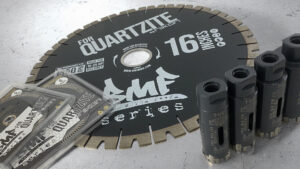
Primary: BMF™ Quartzite Silent Core Blade
Engineered for high pressure and chip-free cuts.
Silent core reduces vibration and heat buildup.
Alternative: Stinger BLACK™ V2
Patterned 25mm segments extend life on quartzite.
Ideal for mixed-material shops cutting both granite and quartzite.
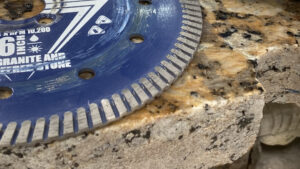
Primary: BMF™ Quartzite Turbo Blade
Fast, clean handheld cuts with turbo segmented edges.
Alternative: Stinger Black Turbo Blade
All around go to professional option with solid speed performance.
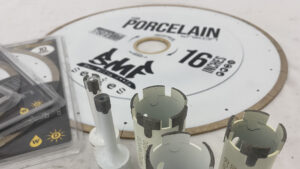
Primary: BMF Quartzite Core Bit
Turbo designed segment for fast coring in tough quartzite material.
Water-assisted for cooling and chip removal.
Alternative: Stinger T-TYPE Vacuum-Brazed Bit
Faster drilling in field settings or tight areas.
Designed for long life on hard materials.
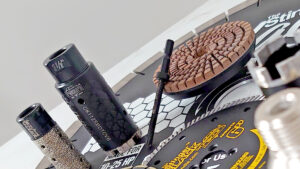
Primary: Stinger™ 7-Step Wet Pads
Premium clarity and long life for quartzite polishing.
Alternative: Stinger™ 3-Step Hybrid Pads
Durable, balanced cost/performance for daily use.
✅ Use slower feed rates and let the tool do the work — rushing leads to segment burn or glaze.
✅ Always use plenty of water when cutting or drilling.
✅ Run bridge saws at lower RPMs for thick or dense slabs.
✅ Invest in tall segmented blades (25mm) to reduce tool change frequency.
✅ Inspect segments regularly for loss of diamond exposure.
“If your blade starts riding or vibrating, you’re likely glazing. Use a dressing stone and reduce your feed rate.”