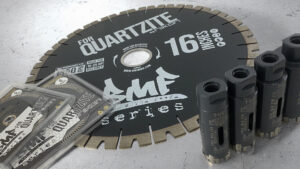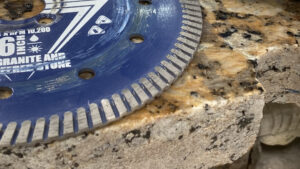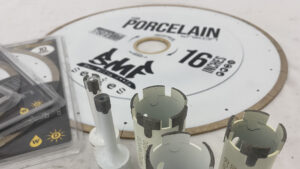







Granite is a dense, crystalline stone known for its durability and aesthetic appeal. While easier to fabricate than quartzite, it still presents challenges with segment wear, chipping, and consistency across slabs.
Variable hardness across different colors or patterns.
Heat buildup during long cuts or aggressive feeding.
Edge chipping if the wrong blade is used or feed is too fast.
Segment wear when using low-grade blades.
Primary: Stinger BLACK™ V2
25mm patterned diamond segments provide superior life and finish.
Designed to minimize vibration and maintain edge integrity.
Alternative: Spider™ II Blade
Turbo segmented blade with fast feed capability and solid finish at a more economical price point.
Primary: Stinger Black Turbo Blade
Excellent performance on granite with fast, clean cuts.
Alternative: Spider™ Turbo Blade
Affordable and effective for field cuts or installers.
Primary: Stinger™ T-Seg Core Bit
Balanced bond for granite; ideal for shop use and long runs.
Alternative: Spider™ Vacuum-Brazed Core Bit
Versatile field-use bit for handheld wet/dry applications.
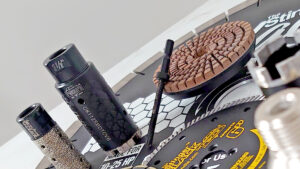
Primary: Stinger™ 7-Step Pads
Delivers deep gloss and clarity for premium granite surfaces.
Alternative: Spider™ 7-Step Wet Pads
Durable and affordable with a solid finish for everyday shop use.
✅ Match blade bond hardness to granite density—darker granites tend to be harder.
✅ Use ample water to cool and clear debris during cuts.
✅ Use slow, steady feed to avoid vibration and premature wear.
✅ Keep blades sharp with routine dressing to maintain cutting speed and finish.
“If your blade is leaving swirl marks or burn lines, try reducing feed speed and dressing the segments.”