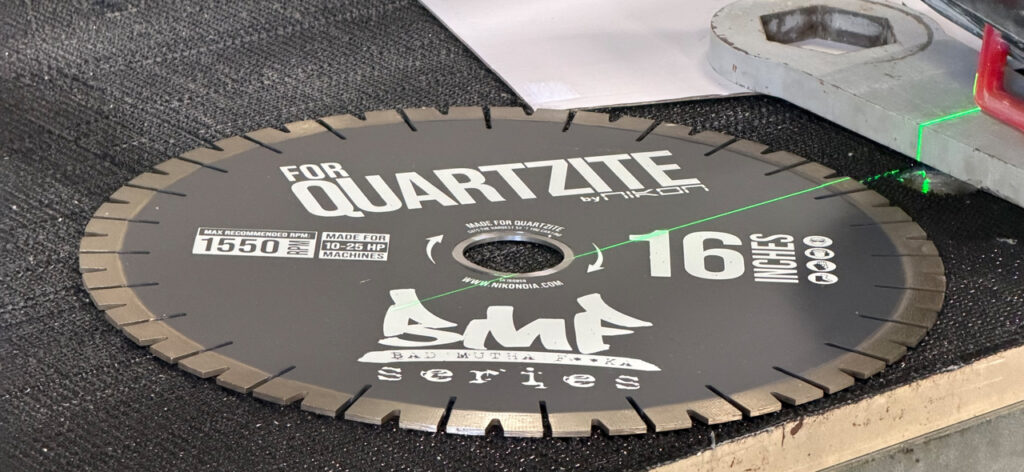







Blades, Buyers Guides, Education
Bridge Saw Blades for Granite, Quartzite, Quartz, and Engineered Stone
Jul
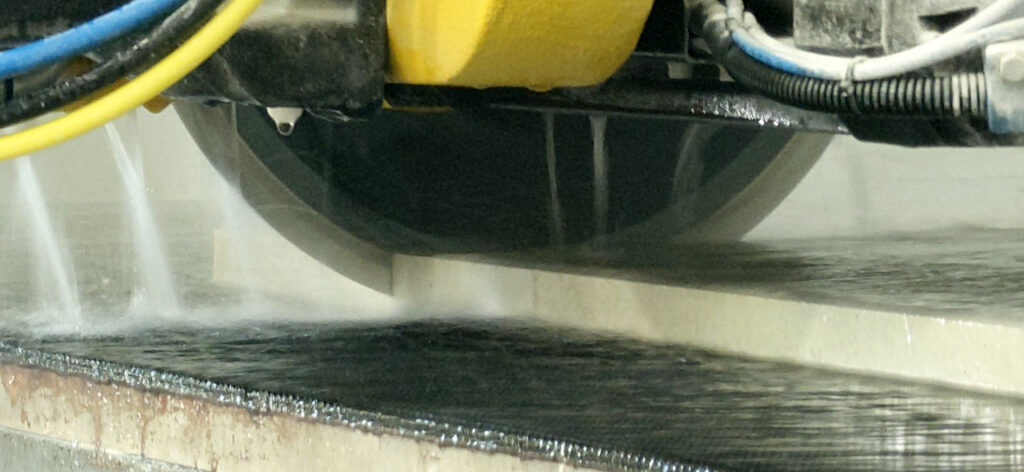
Bridge saw blades play a major role in how efficiently a stone shop moves from slab cutting to finishing, polishing, and installation. The right blade does more than get through the material. It helps protect the edge, reduce rework, support smoother production, and make the final result more predictable.
For fabricators cutting granite, quartzite, quartz, porcelain, Dekton, marble, and engineered stone, blade choice can quietly affect the entire workflow. A blade that cuts too slowly, chips too easily, vibrates too much, or wears out too fast can create extra labor, wasted material, delayed jobs, and tighter margins.
That is why bridge saw blade selection should not be treated as an afterthought. Segment design, bond type, blade diameter, core construction, machine power, RPM, feed rate, water flow, and material hardness all matter. When those details are matched correctly, shops can cut cleaner, move faster, and reduce avoidable correction work.
Nikon Diamond Tools offers multiple bridge saw blade options for different shop needs, including STINGER™ BLACK V2, BMF™ Quartzite, BMF™ for Low HP Machines, SPIDER™ II, and STINGER™ Marble Bridge Saw Blades. Each option has a different role depending on the material, machine setup, and cutting goal.
Why Bridge Saw Blade Selection Matters
A bridge saw blade sits at one of the most important points in the fabrication process: the first major cut. If the cut is clean, accurate, and controlled, the next steps are easier to manage. If the cut is rough, slow, chipped, or inconsistent, the shop may spend more time fixing problems before the piece can move forward.
Small cutting issues can add up quickly. A chipped edge may need extra polishing. A rough cut may require correction. A blade that wears too fast may need to be changed sooner than expected. A blade that vibrates can make it harder to keep the cut consistent, especially on dense materials or miter work.
For shop owners and production managers, the blade affects more than the cut line. It affects labor time, finishing time, material protection, machine efficiency, installation confidence, and overall profitability.
What Shops Should Look for in a Bridge Saw Blade
A strong bridge saw blade should support a balance of cutting speed, edge quality, accuracy, durability, and machine compatibility. Focusing on only one benefit can create problems elsewhere. A blade that cuts fast but leaves a rough edge may create more polishing work. A blade that cuts clean but moves too slowly may reduce production flow. A blade that lasts long but is not matched to the material may still create chipping or stress on the machine.
The best choice depends on the shop’s materials, machine power, cutting style, and production volume. Fabricators should look at the full cutting environment, not just the blade price.
A good bridge saw blade should help support:
- Clean edge quality with reduced chipping
- Consistent performance across repeated cuts
- Proper speed for the material and machine
- Longer tool life and fewer blade changes
- Stable cutting with reduced vibration
- Compatibility with straight cuts, miter cuts, and production cutting needs
- Lower rework and smoother shop workflow
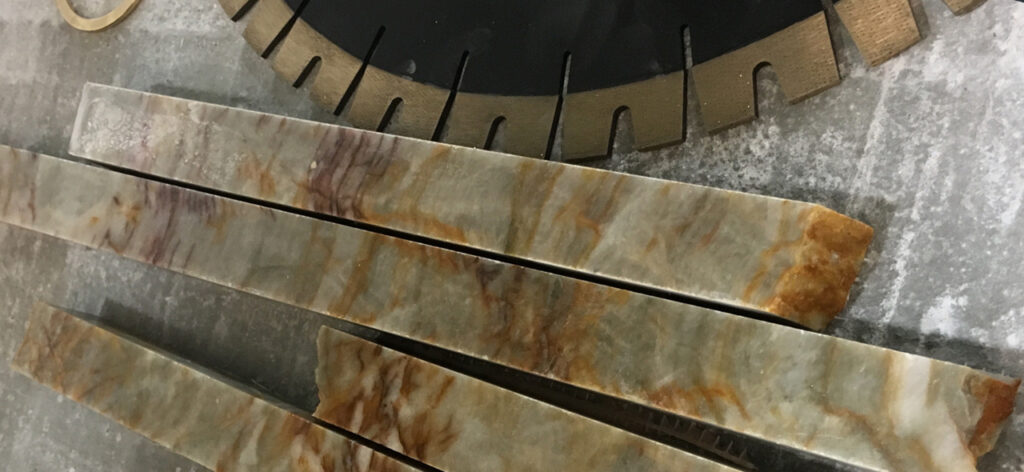
Bridge Saw Blade Factors That Affect Cut Quality
Bridge saw blade performance is not based on one feature alone. The cut depends on how multiple blade and machine factors work together.
Factor
Why It Matters in the Shop
Segment design
Patterned, notched, turbo, continuous, or specialty segments influence speed, debris removal, edge finish, and chip control.
Segment height
Taller segments can support longer blade life and more consistent performance over time when used properly.
Bond type
The bond controls how diamonds are exposed. Harder materials often need a bond that exposes fresh diamonds efficiently. Softer materials may need a different bond to avoid excessive wear.
Silent core
A reinforced or silent core can help reduce noise and vibration, supporting smoother and more accurate cuts.
Blade diameter
Diameter must match the bridge saw and cutting depth requirements. Common bridge saw blade sizes vary by material and machine setup.
RPM and feed rate
Running too fast, too slow, or feeding incorrectly can affect chipping, heat, tool life, machine load, and edge quality.
Water flow
Proper water flow helps cool the cut, clear debris, and protect the blade and material during production.
Match the Blade to the Material
Different materials behave differently under a bridge saw. Granite, quartzite, marble, porcelain, Dekton, quartz, and engineered stone should not always be treated the same. The right blade choice depends on hardness, brittleness, density, resin content, and the type of finish the shop needs.
Material
What the Shop Should Consider
Nikon Direction
Granite
Dense natural stone that needs speed, edge control, and consistency.
STINGER™ BLACK V2, SPIDER™ II, BMF™ Low HP depending on machine and production need.
Quartzite / hard granite
Very hard material that can increase blade stress and chipping risk.
BMF™ Quartzite or STINGER™ BLACK V2 for demanding hard-material cutting.
Quartz / engineered stone
Requires a clean cut while controlling heat, vibration, and chipping.
STINGER™ BLACK V2, SPIDER™ II, or BMF™ Low HP depending on saw setup.
Porcelain / Dekton / ultracompact
Brittle surfaces need strong chip control and material-specific blade selection.
Use Nikon bridge saw blade options designed for these surfaces.
Marble / soft stone
Softer stone needs a blade that cuts cleanly without excessive wear or edge damage.
STINGER™ Marble Bridge Saw Blades.
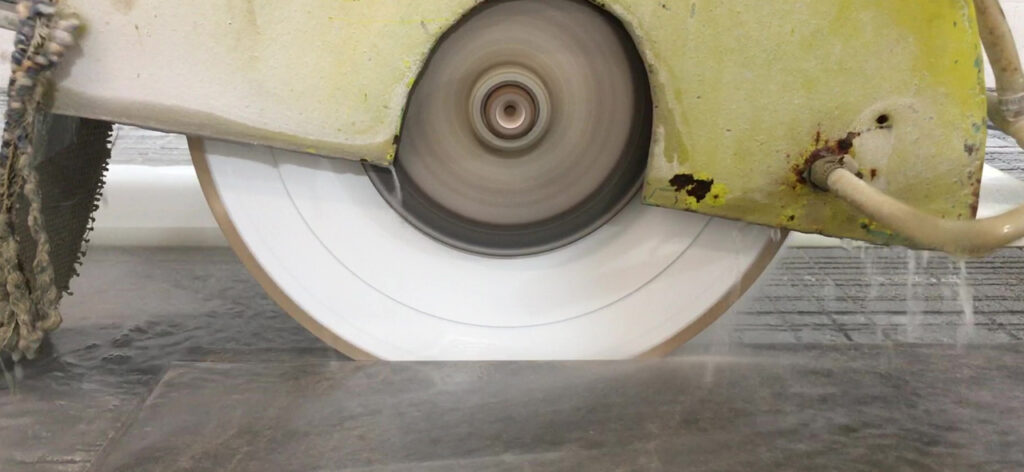
BMF™ Quartzite: For Quartzite and Hard Granite
Quartzite and hard granite can demand more from a bridge saw blade than softer or more predictable materials. BMF™ Quartzite Bridge Saw Blades are designed for hard-material cutting where precision, power, and reliability matter.
This option is especially helpful when shops are working with dense quartzite or hard granite and need a blade that supports clean cutting, reduced chipping, and strong performance under load. The patterned diamond segments and V-notch design help support smoother cutting, while the silent core helps reduce vibration during demanding cuts.
BMF™ for Low HP Machines: For Machine-Specific Needs
Not every shop runs the same bridge saw setup. Machine power matters, and a blade that performs well on one saw may not be the best choice for a lower-horsepower machine.
BMF™ for Low HP Machines is designed for granite and engineered stone and gives shops a blade option that better matches certain machine setups. For shops that need to protect cut quality without overloading the saw, machine compatibility should be part of the blade decision.
SPIDER™ II and STINGER™ Marble: More Options for Specific Jobs
A complete bridge saw blade lineup should give shops options, not force every material into one tool. SPIDER™ II can be a practical choice for fabricators looking for fast, clean bridge saw cutting across common production materials. STINGER™ Marble Bridge Saw Blades give shops a more material-specific option for marble and soft stone.
The key is to avoid treating all bridge saw blades the same. Matching the blade to the material, saw, and finish expectation helps the shop get better results with less trial and error.
RPM, Feed Rate, and Water Flow Matter
Even the right blade can underperform if the operating setup is wrong. RPM, feed rate, water flow, and machine load all affect cut quality and tool life.
A feed rate that is too aggressive can increase chipping, heat, and machine strain. A feed rate that is too slow can reduce productivity and may still create heat-related issues. Miter cuts often need a more controlled feed rate than straight cuts because they place different demands on the blade and material.
Water flow should also be consistent. Proper water delivery helps cool the blade, clear debris, and support a cleaner cut. If water is uneven or blocked, the blade may run hotter, the cut may become rougher, and tool life may be affected.
Before changing blades, shops should also check whether the saw setup, RPM, water flow, and feed rate are aligned with the material and blade recommendations.
How the Wrong Bridge Saw Blade Costs a Shop Money
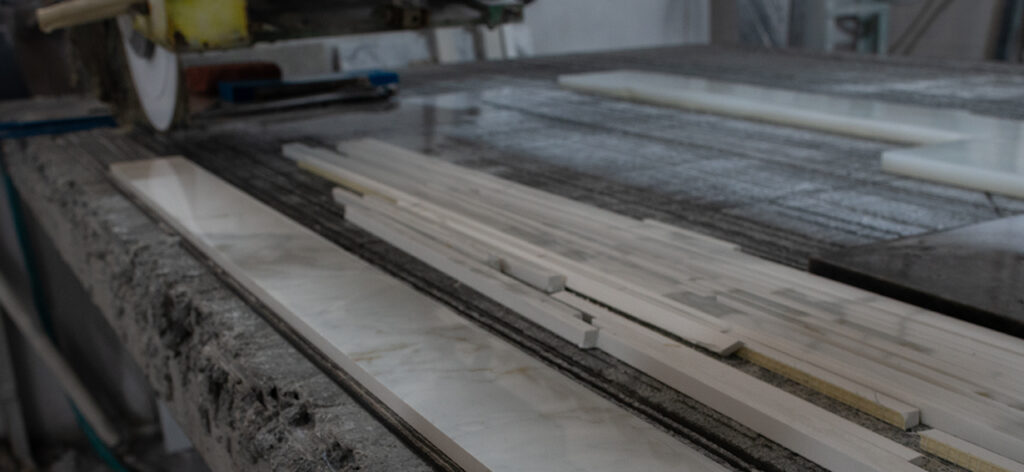
A low-performing or poorly matched blade can cost more than the blade itself. Slow cutting increases labor time. Chipping creates rework. Rough edges can add finishing steps. Short blade life increases replacement frequency. Vibration can affect accuracy and cut consistency.
For a fabrication business, every extra step affects profitability. If the team spends more time correcting cuts, polishing edges, changing blades, or slowing down to avoid damage, the shop loses time that could be used on the next job.
Signs It May Be Time to Reevaluate Your Bridge Saw Blade
A shop should consider reevaluating its blade when cutting issues become frequent enough to affect quality, speed, or workflow. The blade may not always be the only problem, but it is often one of the first areas worth checking.
- More chipping than usual
- Slower production or operators needing to reduce feed rate too much
- Rough or inconsistent edges
- More polishing, grinding, or correction time after cutting
- Frequent blade changes or short tool life
- Increased vibration, noise, or machine strain
- Cuts that vary from one material to another
- More downtime or less predictable production timing
Final Takeaway
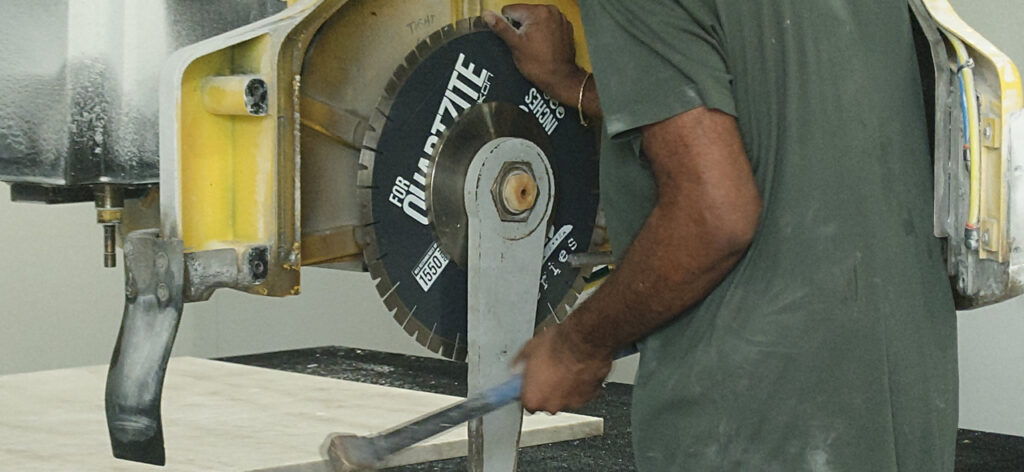
Bridge saw blade performance affects more than the cut. It affects labor, finishing time, material protection, machine efficiency, production flow, and profitability.
For shops cutting granite, quartzite, quartz, marble, porcelain, Dekton, and engineered stone, the right blade can help reduce rework, improve efficiency, support cleaner results, and make production more predictable.
STINGER™ BLACK V2 remains a strong premium option for shops that want speed, durability, and clean edge quality across demanding materials. But the best Nikon bridge saw blade depends on the job. BMF™ Quartzite, BMF™ Low HP, SPIDER™ II, and STINGER™ Marble each give fabricators a more targeted option depending on material, machine setup, and cutting goal.
Ready to improve bridge saw cutting performance? Explore Nikon bridge saw blades or contact Nikon for help choosing the right blade for your material and shop setup.